“`html
Why Your Child Loses Confidence in School—and How to Rebuild It
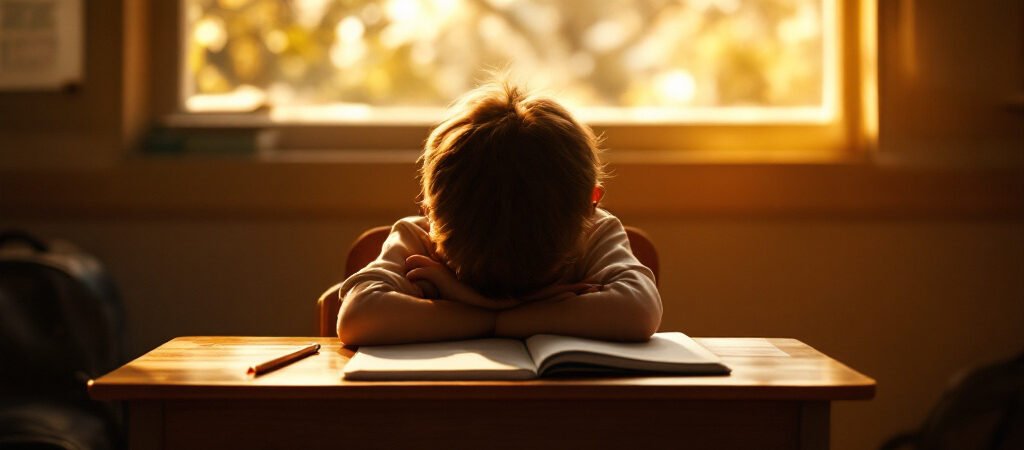
A child losing confidence in school often announces itself quietly. Maybe it’s the way your daughter stares at her math worksheet, eraser worn down to nothing, before finally pushing it away with a sigh. Or your son who used to race to tell you about his day but now just shrugs and says “fine” when you ask how school went. Perhaps it was the moment your heart cracked a little when your child looked up at you, eyes wet, and whispered, “I’m just stupid, Mum.”
You’re not imagining it. Something has shifted.
If you’ve landed here searching for answers, you’re already doing exactly what a good parent does—paying attention and looking for ways to help. The truth is, a child losing confidence in school is more common than you might think, and it rarely happens overnight. It builds slowly, often invisibly, until one day your bright, curious kid becomes withdrawn, anxious, or convinced they’re simply “not smart enough.”
Let’s talk about why this happens and, more importantly, what you can do about it.
What Causes a Child to Lose Confidence in School?
Confidence doesn’t crumble from a single bad grade or one tough day. It erodes through repeated experiences that teach children they can’t succeed—even when that’s not remotely true.
Here are the most common culprits:
- Comparison with peers: When children constantly measure themselves against classmates who seem to “get it” faster, they start to believe something is wrong with them.
- Fear of making mistakes: Some classrooms (unintentionally) create environments where wrong answers feel shameful rather than part of learning.
- Learning gaps that have gone unnoticed: A child who missed foundational concepts—perhaps due to illness, a move, or disrupted schooling—may struggle silently for months before anyone realises.
- Negative feedback patterns: Well-meaning teachers and parents sometimes focus heavily on what needs fixing rather than what’s going well.
- Social difficulties: Feeling excluded, bullied, or simply “different” from other children spills over into academic confidence surprisingly fast.
- Perfectionism and anxiety: Some children set impossible standards for themselves, and anything less than perfect feels like failure.
- A mismatch between learning style and teaching approach: A child who learns best through hands-on activity may flounder in a lecture-heavy classroom—not because they lack ability, but because the format doesn’t suit them.
If you’re noticing signs your child is struggling in school, confidence loss is often part of the picture. The two feed each other in a frustrating cycle: struggle leads to lost confidence, and lost confidence makes it harder to try again.
When Your Child Says They’re Stupid: What’s Really Going On
Few phrases hit parents harder than “I’m stupid” coming from their own child’s mouth. Your first instinct might be to immediately counter it—”No, you’re not! You’re so clever!”—but pause for a moment.
When children call themselves stupid, they’re rarely making a logical assessment of their intelligence. They’re expressing something deeper: frustration, shame, helplessness, or fear. They’ve tried and failed enough times that this explanation feels true to them.
What helps more than reflexive reassurance is curiosity. Try asking gentle questions:
“What happened that made you feel that way?”
“Which bit felt really hard?”
“Has this been bothering you for a while?”
These questions open doors instead of closing conversations. They tell your child you’re not dismissing their feelings—you want to understand them.
You can also share your own experiences with struggle. Children often believe adults have always been competent at everything. Hearing that you once cried over long division or felt lost in science class helps normalise the experience of finding things difficult.
For more on navigating these conversations, our guide on how to talk to your child about getting things wrong offers practical scripts you can use.
How School Itself Can Contribute to a Child Losing Confidence
Schools, even wonderful ones, aren’t designed for every child to thrive in exactly the same way. The structure of most classrooms—one teacher, many students, a standardised curriculum, regular assessments—creates certain pressures that affect some children more than others.
Consider the child who needs more time to process information. In a fast-paced class, they may constantly feel a step behind. Or the child who understands concepts during lessons but freezes during tests. They know the material, but their confidence crumbles under exam conditions.
Then there’s the grading system itself. When a child repeatedly sees red marks, low scores, or disappointing results, they start to internalise a message: “I’m not good at this.” Over time, this becomes “I’m not good at school,” and eventually, for some children, “I’m just not good.”
None of this means school is bad or teachers are failing. It simply means that the standard educational environment doesn’t automatically build every child’s confidence. Some children need additional support to feel capable and valued as learners.
How to Build Your Child’s Confidence in Learning
Rebuilding confidence takes time. There’s no overnight fix. But there are specific, practical things you can do at home that genuinely help.
Celebrate effort, not just outcomes. When we only praise results—”Great job getting an A!”—we accidentally teach children that our approval depends on performance. Instead, notice and name the process: “I saw you kept trying even when that was frustrating. That takes real courage.”
Break tasks into smaller pieces. An overwhelmed child looking at a page of maths problems sees a mountain. Help them see just the first step. “Let’s just do the first one together and see how it goes.” Small wins rebuild confidence faster than tackling everything at once.
Create a safe space for mistakes. Make your home a place where getting things wrong is normal and expected. When you make a mistake—burning dinner, taking a wrong turn—narrate your own process: “Well, that didn’t work! Let me try something different.”
Find their strengths and lean into them. A child who feels like a failure in spelling might be brilliant at building things, telling stories, or understanding how machines work. Make sure they have regular experiences of competence and success, even if those happen outside school subjects.
Avoid comparisons. This includes positive comparisons (“Why can’t you be more like your sister?”) and negative ones. Every child’s learning journey is their own.
Our article on growth mindset for kids dives deeper into how praising effort rather than ability changes the way children approach challenges.
Supporting an Anxious Learner at Home
Some children don’t just lose confidence—they develop genuine anxiety around school and learning. You might notice physical symptoms like stomachaches on school mornings, difficulty sleeping, or tearfulness before homework time.
For anxious learners, pressure makes everything worse. The goal is to lower the stakes while still keeping learning happening.
First, validate the anxiety. Saying “There’s nothing to worry about” dismisses what your child is genuinely feeling. Instead, try: “I can see you’re really worried about this. That must feel awful.”
Then help them take small, manageable steps. An anxious child facing a book report might feel paralysed. But choosing which book to write about? That’s doable. Writing just one sentence about why they picked it? Also doable. Progress comes through tiny actions that prove success is possible.
Routine helps too. Anxious children often feel calmer when they know what to expect. A predictable homework time, a consistent workspace, and a clear sequence of steps reduce the mental energy spent worrying about what comes next.
Finally, watch for signs that anxiety is becoming overwhelming. If your child’s distress is persistent, severe, or interfering significantly with daily life, it may be worth speaking with their teacher, school counsellor, or your family doctor. You don’t have to navigate this alone.
How Low Self-Esteem at School Affects Everything Else
Here’s something parents sometimes miss: school confidence bleeds into every other area of a child’s life.
A child who feels stupid in the classroom may start to doubt themselves socially. They might withdraw from friendships, assuming others don’t want to be around them. They may give up on hobbies they used to enjoy, convinced they won’t be good at those either.
Child low self-esteem at school can also show up as behavioural changes. Some children act out because negative attention feels better than the invisibility of being “the dumb kid.” Others become perfectionists, refusing to try anything unless they’re guaranteed to succeed.
This is why addressing a child losing confidence in school matters so much. It’s not just about grades or academic achievement. It’s about helping your child develop a healthy sense of themselves as someone who can try, learn, grow, and contribute—even when things are hard.
When to Consider Extra Learning Support
Sometimes the best thing you can do for a struggling, confidence-depleted child is bring in additional help. This might mean:
Talking to their teacher. Teachers often see patterns parents don’t. They may have suggestions for support already available at school or observations that help explain what’s going on.
Identifying learning gaps. If your child missed key concepts somewhere along the way, no amount of encouragement will help until those foundations are rebuilt. A diagnostic assessment—formal or informal—can pinpoint exactly where the gaps are.
Finding learning tools that adapt to your child. Every child learns differently. Tools that adjust to individual pace and provide patient, judgment-free support can make a remarkable difference for children whose confidence has taken a hit.
Kiplrn was designed with exactly this in mind. It’s an AI-powered learning companion that meets children where they are, uses Socratic questioning to guide them toward understanding, and never makes them feel foolish for struggling. Children can take their time, make mistakes safely, and gradually rebuild their belief that they can learn. You can explore the Kiplrn Features to see how it works, or check out Kiplrn Pricing to see if it’s right for your family. If you’re wondering about data protection, the Safety & Privacy page covers how children’s information is protected.
Frequently Asked Questions
What are the first signs of a child losing confidence in school?
Early signs include reluctance to talk about school, avoiding homework or specific subjects, negative self-talk (“I can’t do it,” “I’m dumb”), becoming upset more easily around schoolwork, and physical complaints like headaches or stomachaches on school days. You might also notice your child giving up quickly when something feels hard.
How can I help a child losing confidence in school without adding pressure?
Focus on connection before correction. Spend time simply being with your child without bringing up academics. When you do work on school things together, keep sessions short, celebrate effort rather than results, and remind them that mistakes are how brains learn. Lower the stakes wherever possible—learning should feel safe, not high-pressure.
My child says they hate school. Is this normal?
It’s common, but it’s worth paying attention to. Some children say “I hate school” when they’re tired, frustrated, or had a bad day—and that passes. But if the sentiment is persistent and accompanied by withdrawal, anxiety, or low mood, there may be something deeper going on. Gently explore what specifically they dislike and whether it’s connected to feeling incapable or unsuccessful.
Will my child losing confidence in school affect them long-term?
If addressed, temporary confidence loss doesn’t have to become permanent. Children are remarkably resilient. With the right support—emotional safety, appropriate help, and opportunities to experience success—most children rebuild their self-belief. The key is not to ignore the signs or hope they’ll simply outgrow it.
Should I tell the teacher that my child is losing confidence?
Yes. Teachers can’t address what they don’t know about. A brief conversation or email letting them know your child is struggling with confidence gives them important information. Good teachers will adjust their approach, offer encouragement, and keep an eye on how your child is coping in class.
Moving Forward Together
Watching your child lose confidence in school is painful. You remember who they were before—curious, eager, unafraid to try. You want that child back.
The path forward isn’t about fixing your child or forcing them to feel differently. It’s about creating the conditions where confidence can slowly, steadily return. It’s about patience, consistency, and showing up with compassion day after day.
Start small. Listen more than you lecture. Celebrate the trying, not just the succeeding. And remember: the fact that you’re reading this, looking for answers, wanting to help—that already makes an enormous difference to your child, even if they can’t articulate it yet.
They’re lucky to have you in their corner.
If you’d like a learning tool that supports confidence-building at home, Kiplrn is designed to help children learn at their own pace, in their own way, without judgment. Sometimes a fresh approach is all it takes to help a struggling learner remember what they’re capable of.
“`